COATINGS
Here you will find all coatings at a glance - clearly sorted and always available.
Coatings
The requirements for optical coatings are as varied as the
applications of our customers. While some coatings are primarily
intended to minimize disruptive reflections, others are designed to reflect, filter or transmit
specific wavelengths. Often
several active principles intertwine - for example, when a
coating must have both anti-reflective and selective properties
or when metallic layers are combined with dielectric protection systems
. A clear classification into rigid categories
quickly becomes a challenge - and is often not even expedient.
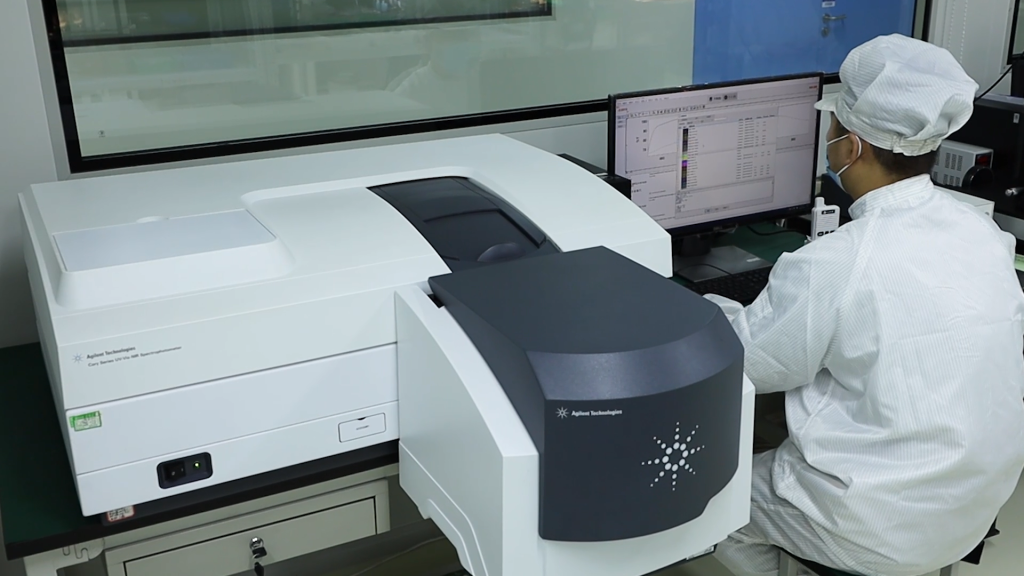
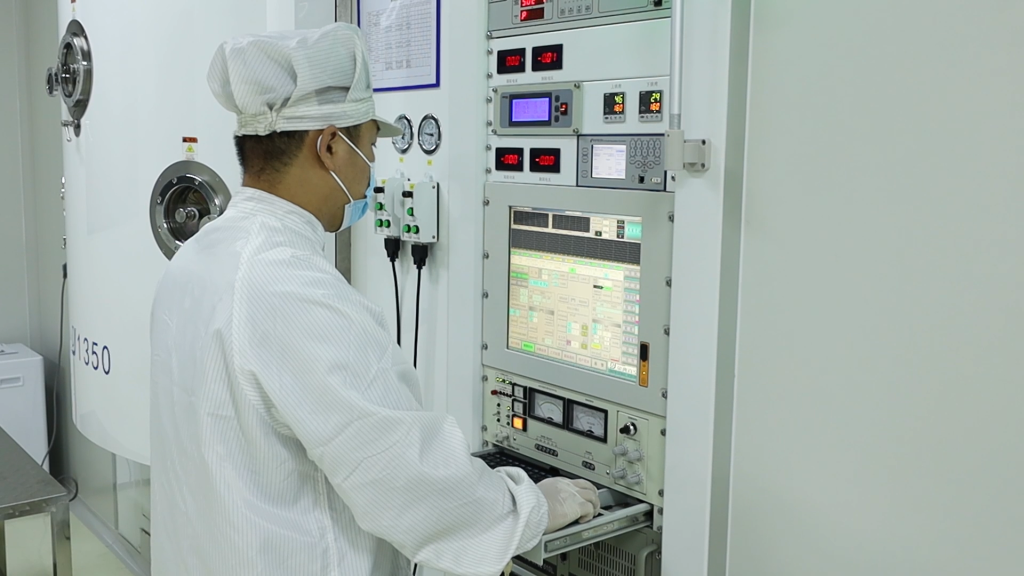
This is exactly where we come in: Instead of prefabricated solutions, we offer you individual, application-oriented advice. We think along with you, ask questions and tailor the material, spectral range and coating technology precisely to your requirements. Whether for high-precision laser systems, sensitive sensor technology or imaging processes - our coatings ensure reliable performance, a long service life and the highest optical quality. Because Q-Photonix is not just about technology, but about solutions that are convincing in practice.
Coating | Specifications and areas of application |
|---|---|
AR | - Anti-reflective coatings reduce surface reflections and improve the transmission of optical elements - Uncoated glass reflects approx. 4 % of the incident light per surface; anti-reflective coatings reduce this value to less than 0.5 % - The effect is based on destructive interference through targeted layer combinations with different refractive indices - The coating is optimized for a specific wavelength range; outside this range, reflection or attenuation may increase - Precise specification of the area of application is crucial for effectiveness |
HR | - High-reflective coatings (HR) maximize reflection - often over 99 % at the target wavelength - They are used in laser systems, interferometers and for beam deflection - Metallic, dielectric or hybrid coatings are used - depending on the requirements - Dielectric systems offer higher reflection and damage thresholds - ideal for high-power lasers - The layers generate constructive interference by alternating materials with a high/low refractive index |
BP | - Bandpass coatings only allow a certain wavelength range to pass through - All other wavelengths are blocked - by reflection or absorption - Important parameters: Bandwidth (FWHM), transmission in the center, optical density (OD) - Fields of application: Fluorescence imaging, spectroscopy, sensor technology, laser technology - Based on complex dielectric multilayers with high spectral selectivity |
Dichroic | - Dichroic filters transmit certain wavelengths and reflect others - depending on the angle of incidence - The separation is based on interference effects between thin layers with changing refractive indices - Enable steep transitions between diffuser and barrier area - No absorption - therefore less heat generation and longer service life - Application: Fluorescence imaging, spectroscopy, light sources, beam delivery systems - Angle and polarization have an influence on the filter effect |
Dielectric | - Dielectric coatings consist of several transparent layers with different refractive indices - They have very low absorption and high resistance to thermal/mechanical stress - Particularly suitable for high-power lasers - Properties such as reflection, transmission or filter effect can be specifically adjusted - Also serve as a protective layer against environmental influences |
Metallic | - Metallic coatings consist of reflective metals such as aluminum, silver or gold - Offer high reflection in the visible and infrared range - Often as a multi-layer system with protective layers (e.g. dielectric) to prevent oxidation - Can be additionally optimized in their effect through interference - Advantageous for broadband reflection when extreme damage thresholds are not necessary |
Hybrid | - Hybrid coatings combine metallic and dielectric layers - Thin metal layers (e.g. silver) are surrounded by protective dielectric layers - Ideal for filters with a steep block effect outside a transmission band - The dielectric coating protects against oxidation and increases durability |
Partially reflective | - Partially reflective coatings divide light into a reflected and a transmitted portion (e.g. 50:50 or 70:30) - Used for beam splitting in optical systems, lighting or laser applications - Adjustable according to wavelength and polarization requirements - Function based on layer structure and spectral design |
Conductive | - Conductive coatings combine optical transparency with electrical conductivity - Protect against static charge, EM interference or discharges - Typical materials: indium tin oxide (ITO), conductive polymers - Application: Displays, sensors, lasers, measuring devices - wherever light transmission + discharge is required |